


Nobody prepares you for the reality of a new wildlife area. You pick up tidbits of information from the internet and buy into the hype, but the ground reality is often a gut punch.
I recently travelled to Umred Pauni Karhandla Wildlife Sanctuary (UPKWLS). It’s one of those places that has risen to prominence as India has expanded its tiger reserves from 30 to 58. The park serves as a satellite core for bigger national parks. Think of it as a fragmented patch of secondary and tertiary forest connecting Navegaon-Nagzira in the north east, Tadoba in the south, and Pench in the north west.
I went for one reason: the tigress they call F2.
F2 is a daughter of the region’s famous tigress Fairy, and at the time I visited, she was rearing five subadults. In the wildlife world, a tigress with a litter of five is the holy grail. It’s a rarity that defies the odds of nature. I had to see them before the family separated.
I dragged my family along. My son even skipped a crucial chess tournament for this trip. My wife, the smartest of us all, packed her scepticism for company. Expectations were high. No pressure, right?
A frustrating start
Our safari started with high hopes and hit a wall immediately. The first two drives in the Karhandla and Gothangaon zones were a wash. We saw nothing. Well, OK! We saw some deer in the distance and a few skulking birds, but you get the drift, right?
Then came the Pauni zone. We had intel about a tigress named Shadow and her three cubs near a Nilgai carcass. When we arrived at the location, we even found drag marks leading into the bush. That day was a study in fruitless patience. We spent four hours in the morning and another four in the afternoon staring at thickets surrounding a waterbody. The tigers were there for sure, but they were playing a ghost dance with us, dragging the carcass deeper into the cover every time we looked away. Eight hours. Zero sightings.
By Tuesday, the situation turned from bad to farcical. The tigers in Gothangaon had left the sanctuary. They were out in the villages, looking for easy cattle kills in agricultural fields. While we drove aimlessly through the dust of the reserve, the tigers were causing pandemonium in a cotton field outside.
Tiger-induced pandemonium at the Welgaon village
An epic fail of a system
It wasn't just the lack of tigers that was grinding me down; it was the place itself.
The forest department in Umred (and in most Indian parks) does its damnedest to make photography difficult. They ban mobile phones – the one camera everyone has, and they charge hefty camera fees for DSLR and mirrorless devices. By the way, what do we get for those fees?
Roads are so narrow that only one vehicle can pass. If you stop for a bird, you block traffic.
Weed infestation deluxe. The forest is choking on lantana, pignut and parthenium. It’s a green wall that destroys visibility and kills the natural grass ungulates need. No grass, no deer. The low prey density forces tigers to seek easy prey at the fringes.
Arbitrary rules. The productive tracks, for example, the shortcut to the meadows in Karhandala, are off-limits to regular tourists. Only elites on full-day game drives can take these routes. The plebs on regular drives have to take the long way around.
In the major parks, if you don’t find tigers, you have other birds and animals to keep you occupied. In UPKWLS, it’s tigers or bust. You’ll be lucky to get some shutter action if the cats don’t show. By the end of Wednesday, I had spent nearly 50 hours – waiting, driving, commuting – for absolutely nothing. The game density was poor. The dust was relentless. I was at my breaking point.
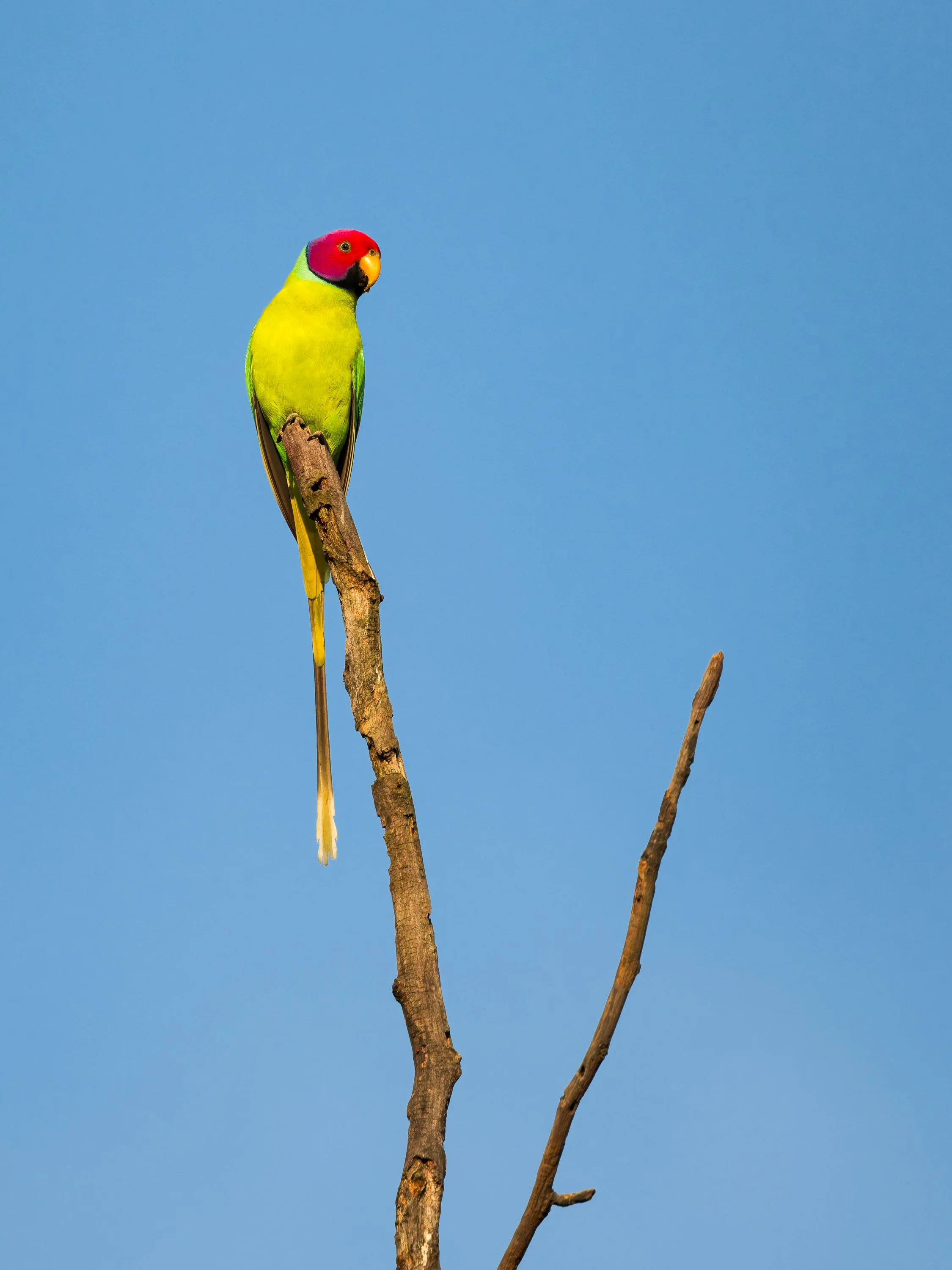
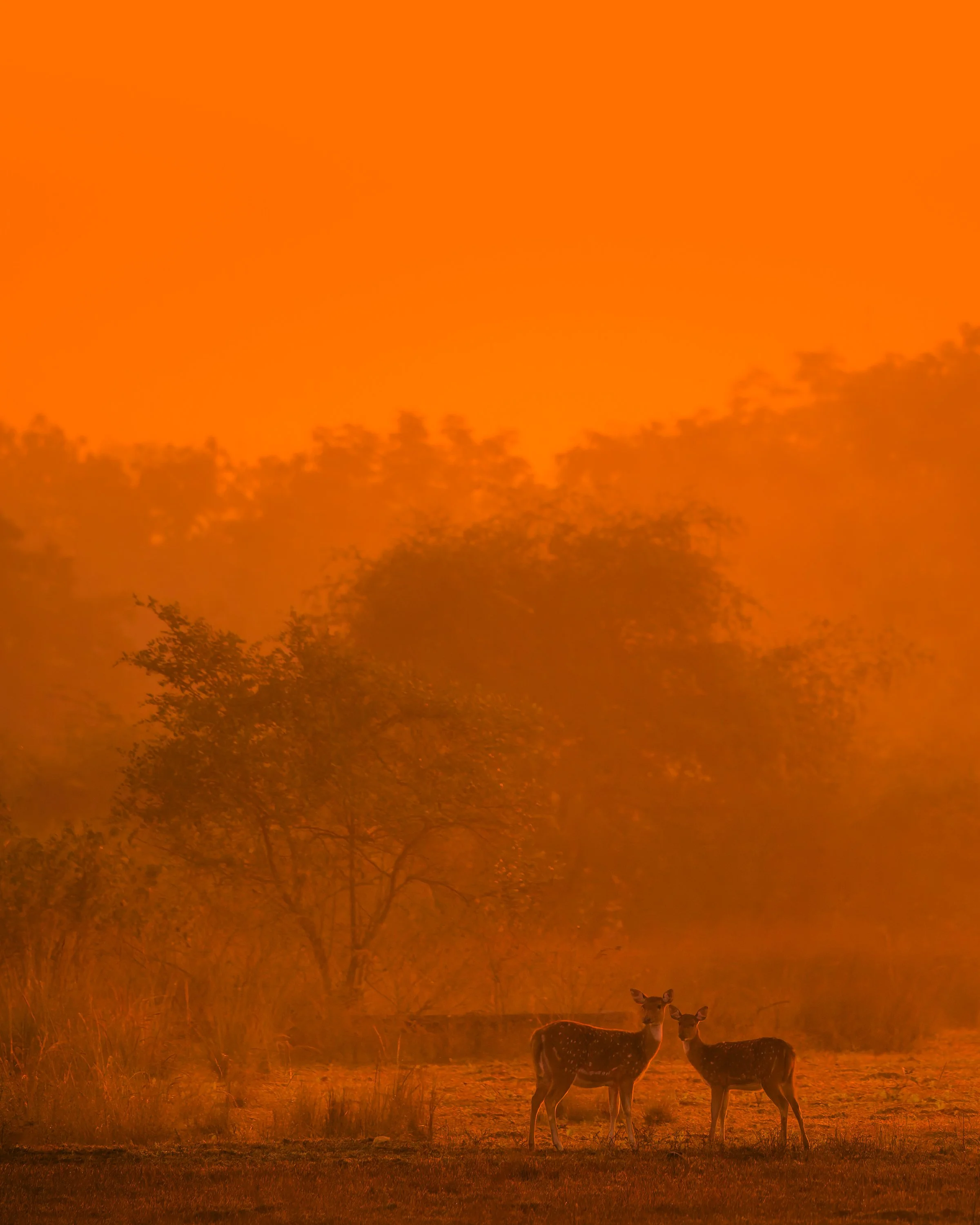
The first few days yielded scarce photo opportunities 👆🏼👆🏼👆🏼
I seriously considered packing my bags and leaving early. I didn't want to fall for the sunk cost fallacy. But since I’d already taken the leave, I decided to endure one last push.
That thing called “the law of averages”
On Thursday morning, the forest threw us a bone.
We spotted wet pug marks on a track. The tigers had crossed the road moments after we entered. Ok! Game on, we thought. By the time we found the family, though, we were late to the party. Yes, we’d finally found our tigers, but amidst a chaotic jam of vehicles. But soon enough, F2 emerged – a tigress who thinks little of safari vehicles.
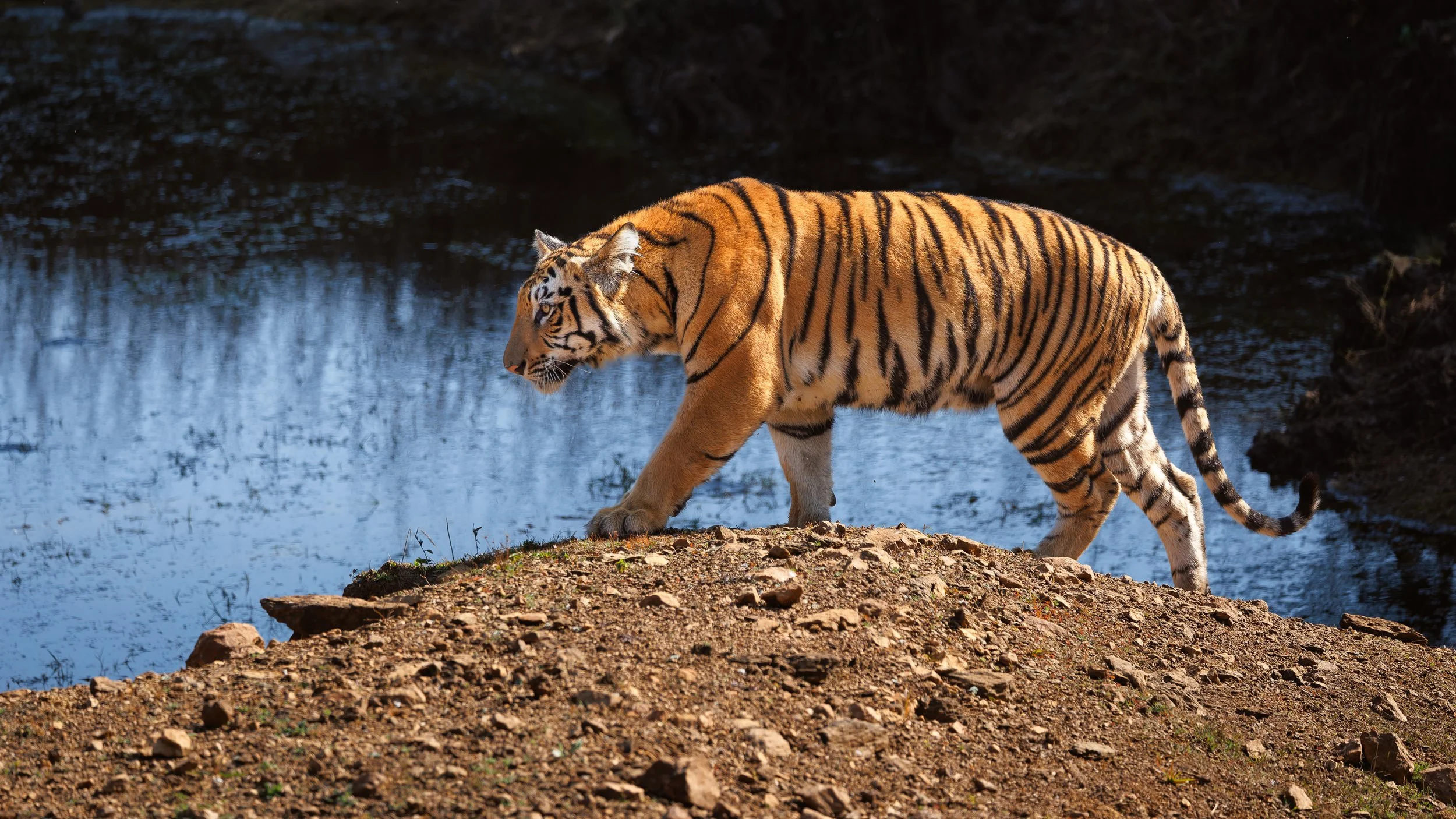
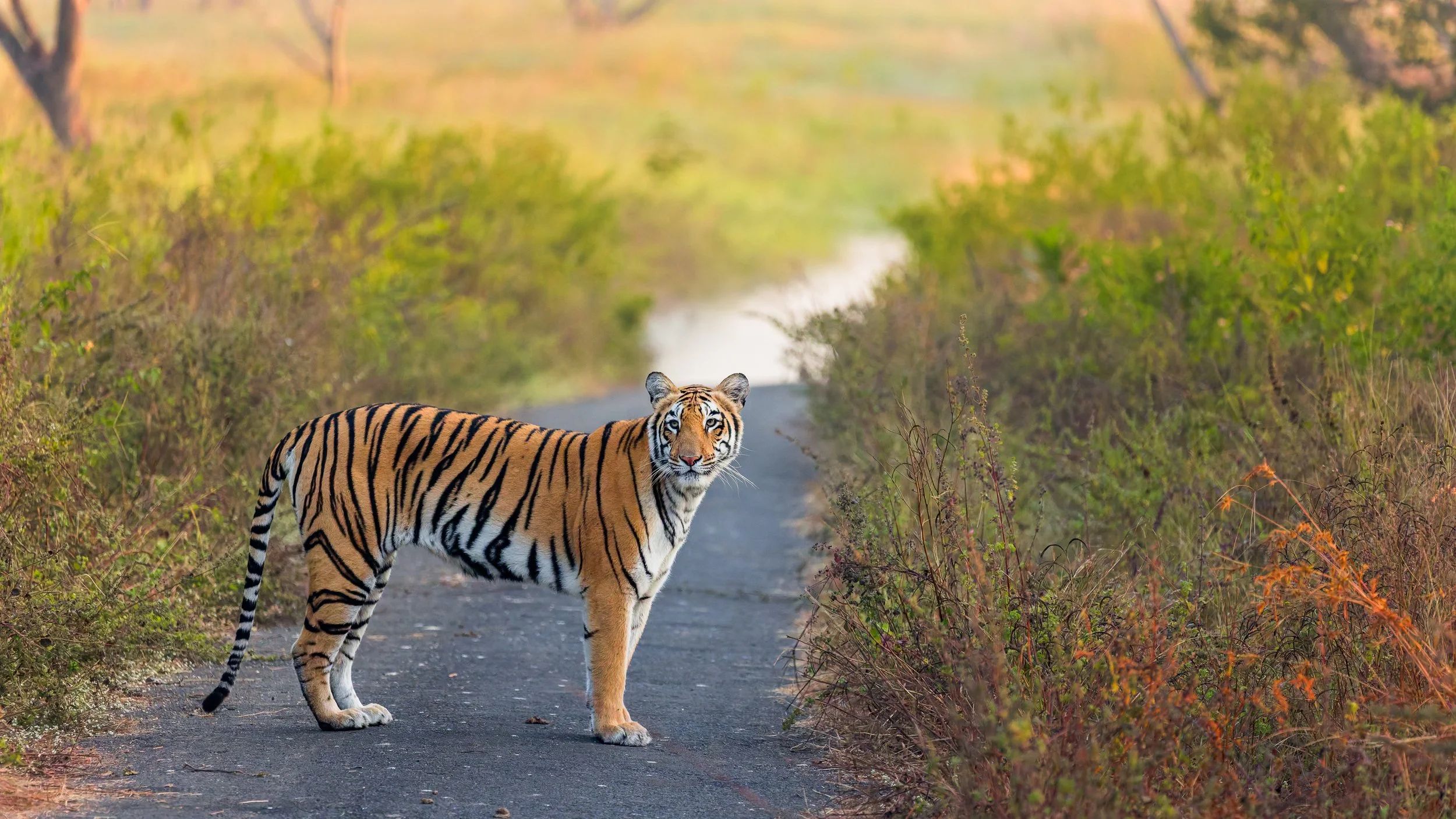
On that Thursday morning, F2 plonked herself at the edge of a wetland
That morning, she sat at the dead end of a tar road, looking into a wetland – empress of all she surveyed. Tar road or not, we were so photography-starved that we shot whatever felt like a decent frame. But drama wasn’t too far behind. As F2 moved towards the bush for her siesta, a barking deer spooked. In the confusion, a spotted deer fawn ran the wrong way – straight into the tigress.
We didn't see the kill, but we heard it. The squeal of the fawn, followed by the crunch of bones. It was brutal, raw, and exactly what we needed to snap out of our funk.
Nothing happened until something did
Our luck didn't just turn; it pivoted 180 degrees.
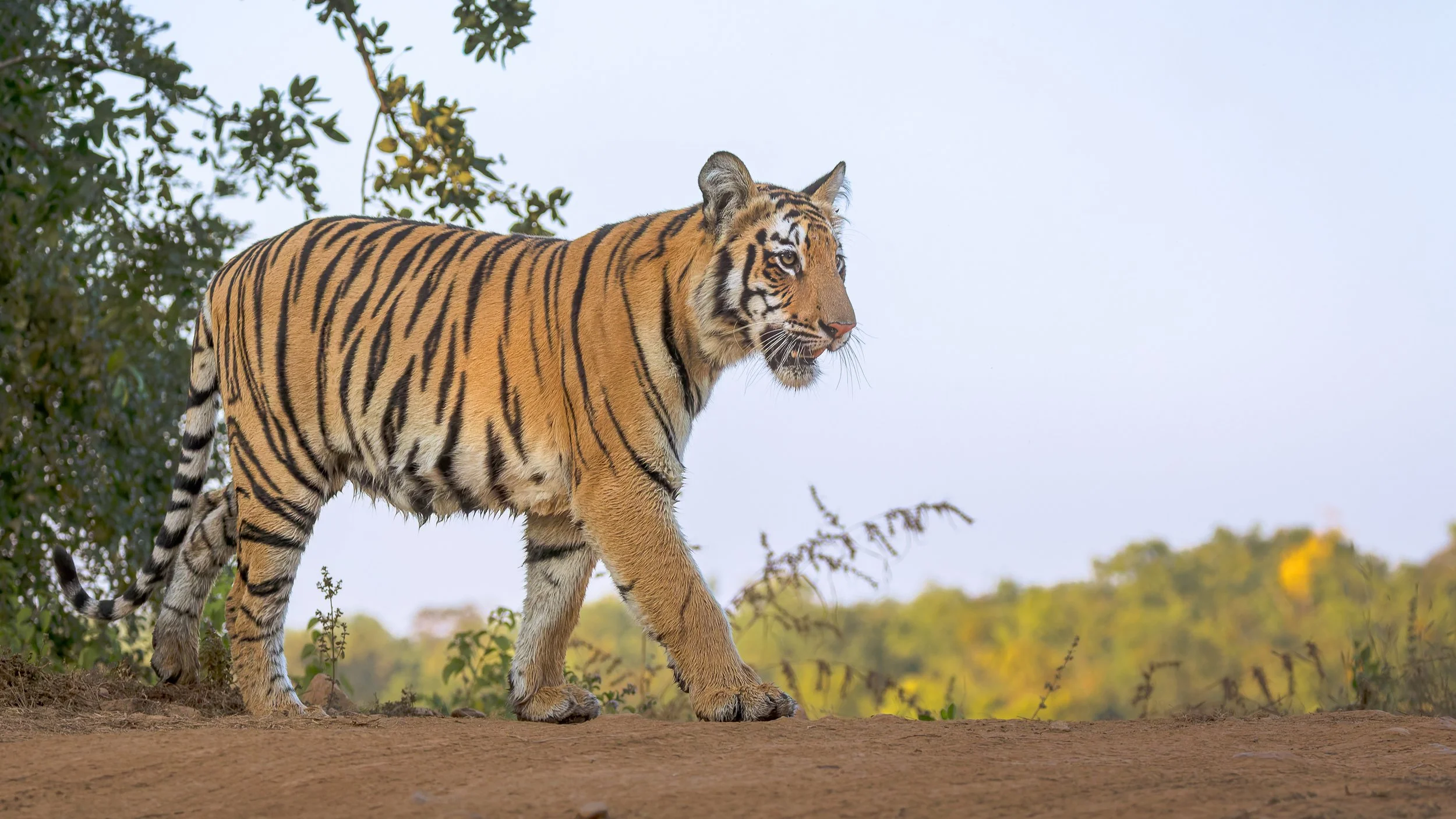
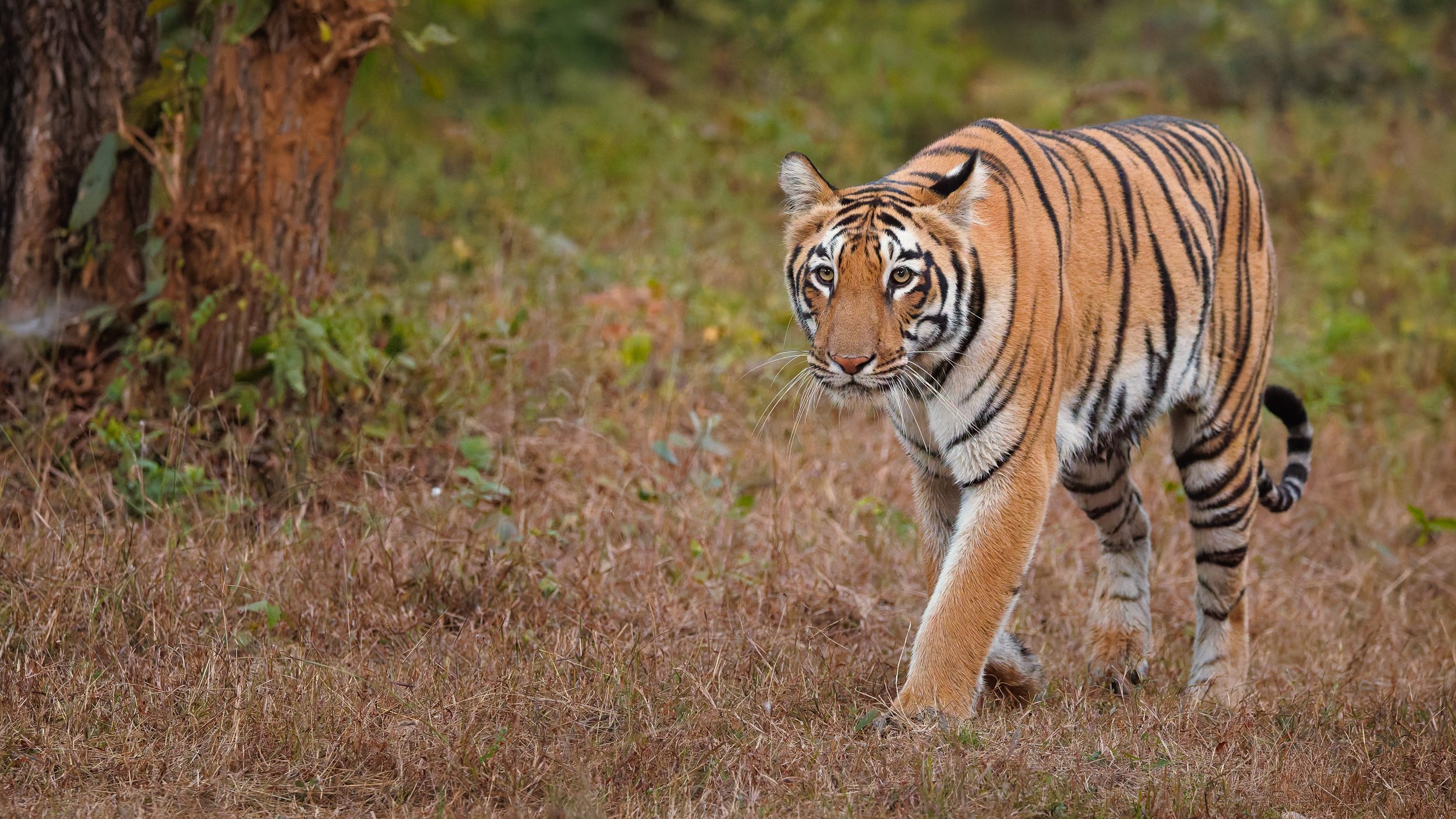
Thursday afternoon: F2 walked the track for miles, leading a convoy of vehicles.
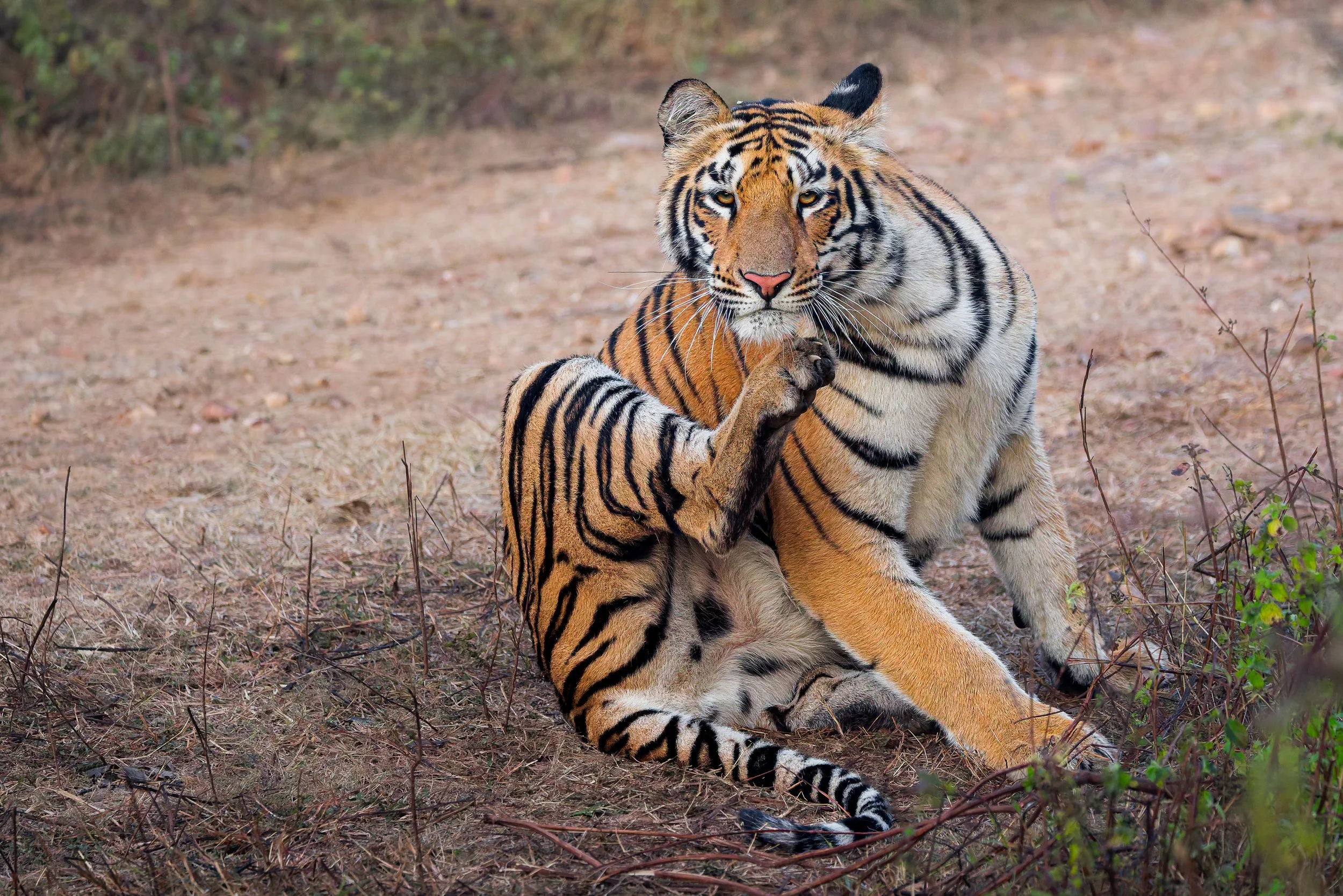
Friday morning: The cubs appeared. They walked along the forest edge and settled by a lake, giving us intimate moments of sibling interaction.
Friday evening: Despite VIPs and politicians clogging the park (the winter assembly was in session in nearby Nagpur), we managed another solid sighting with the cubs.
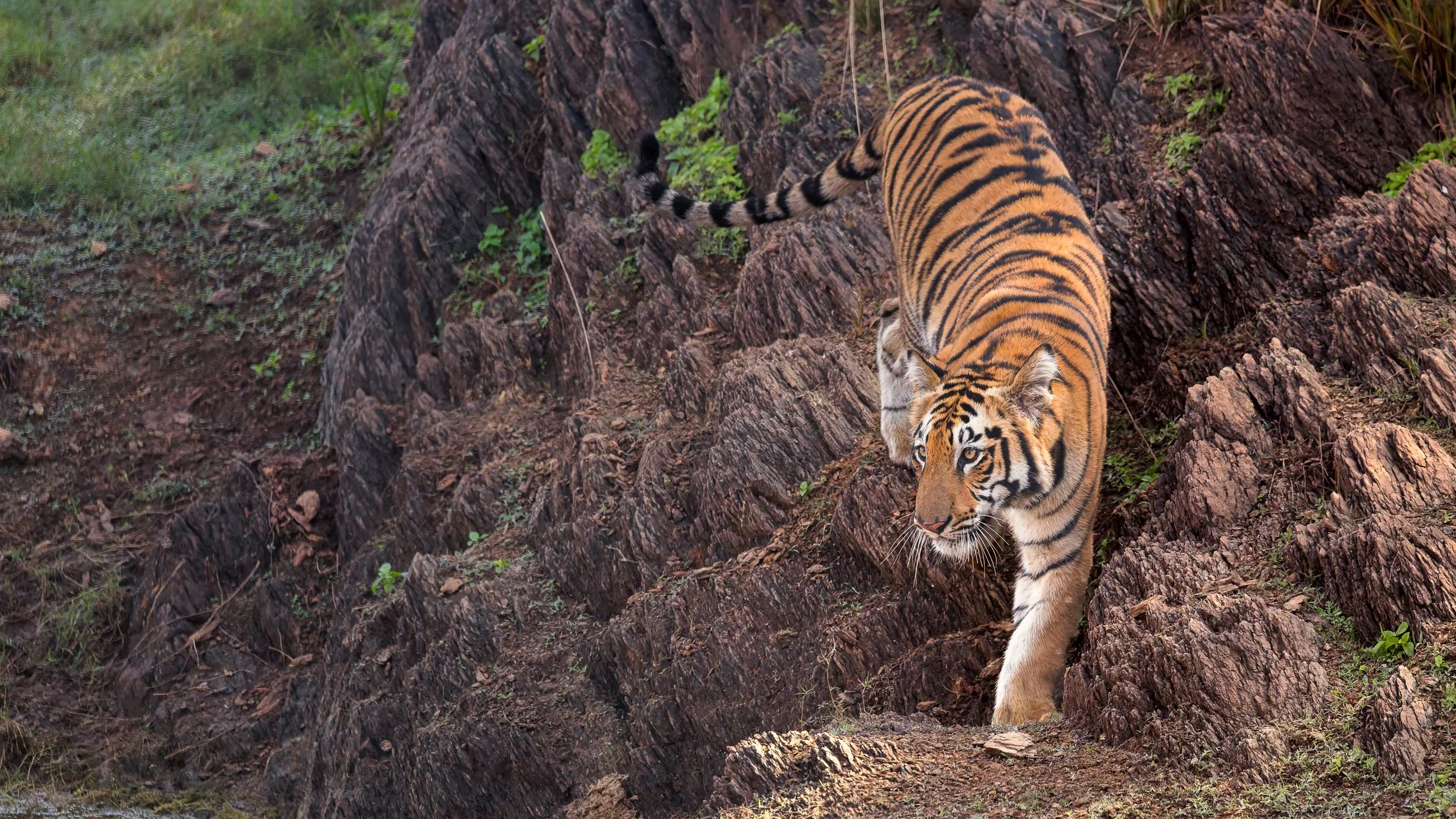
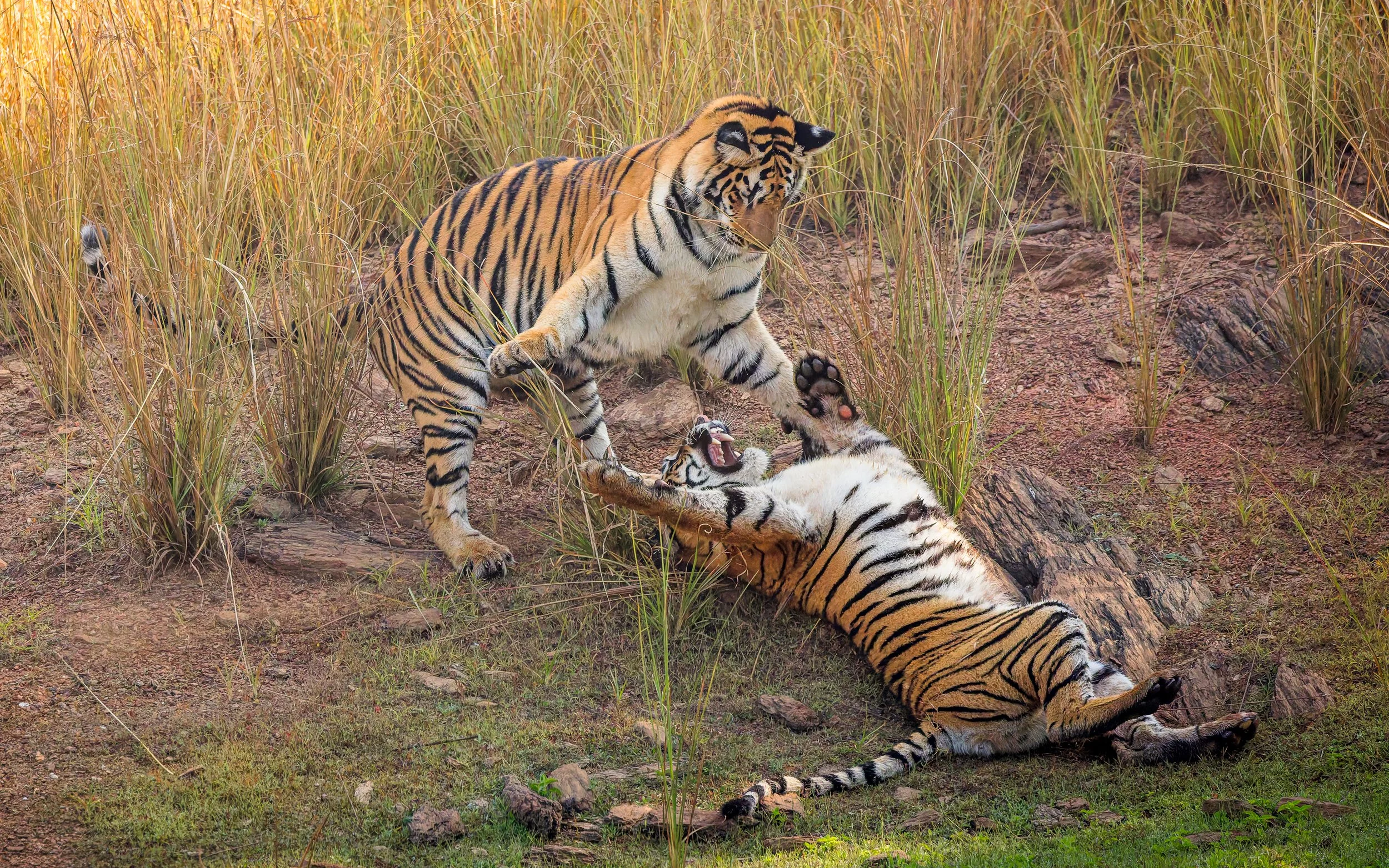
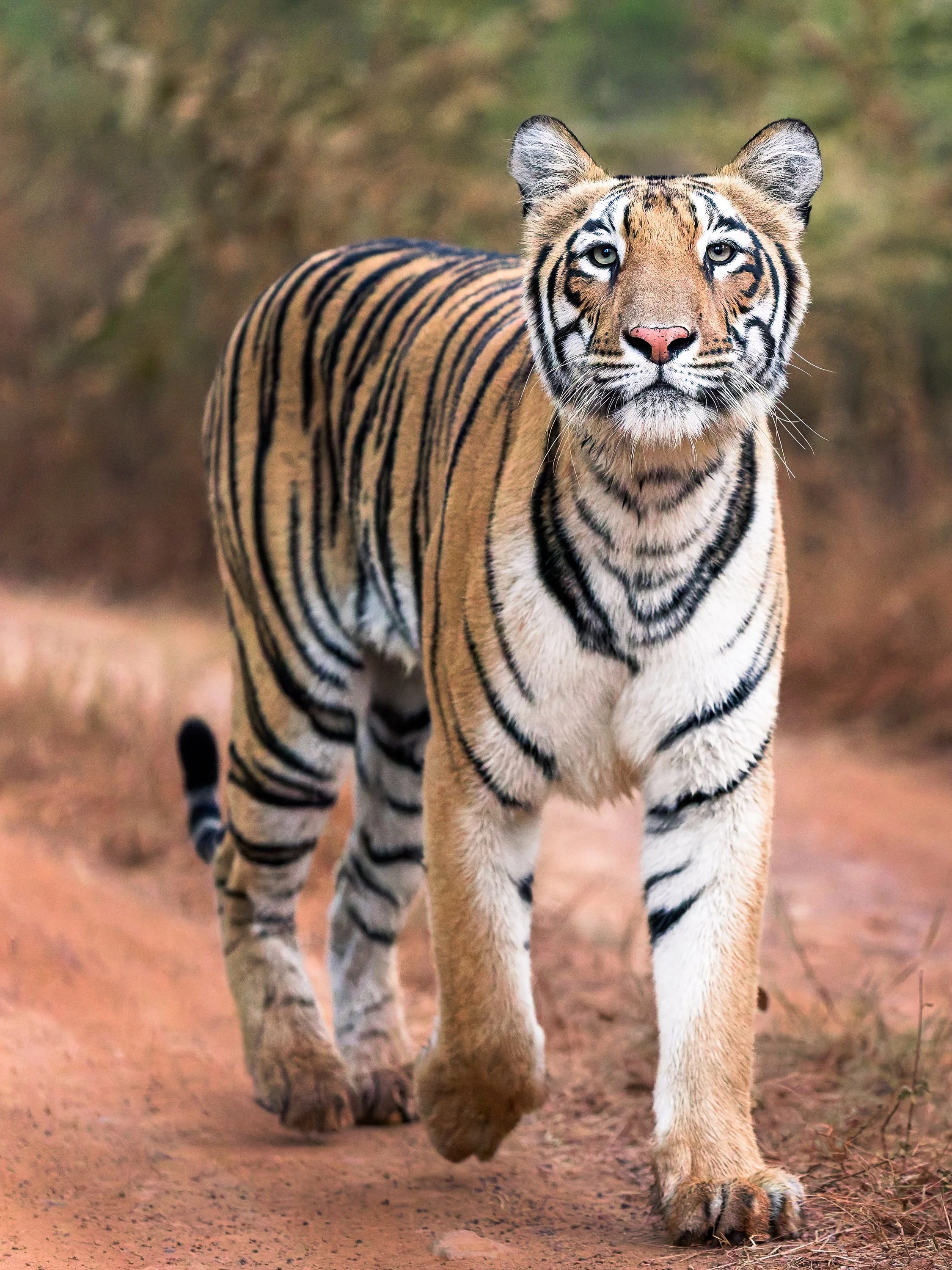
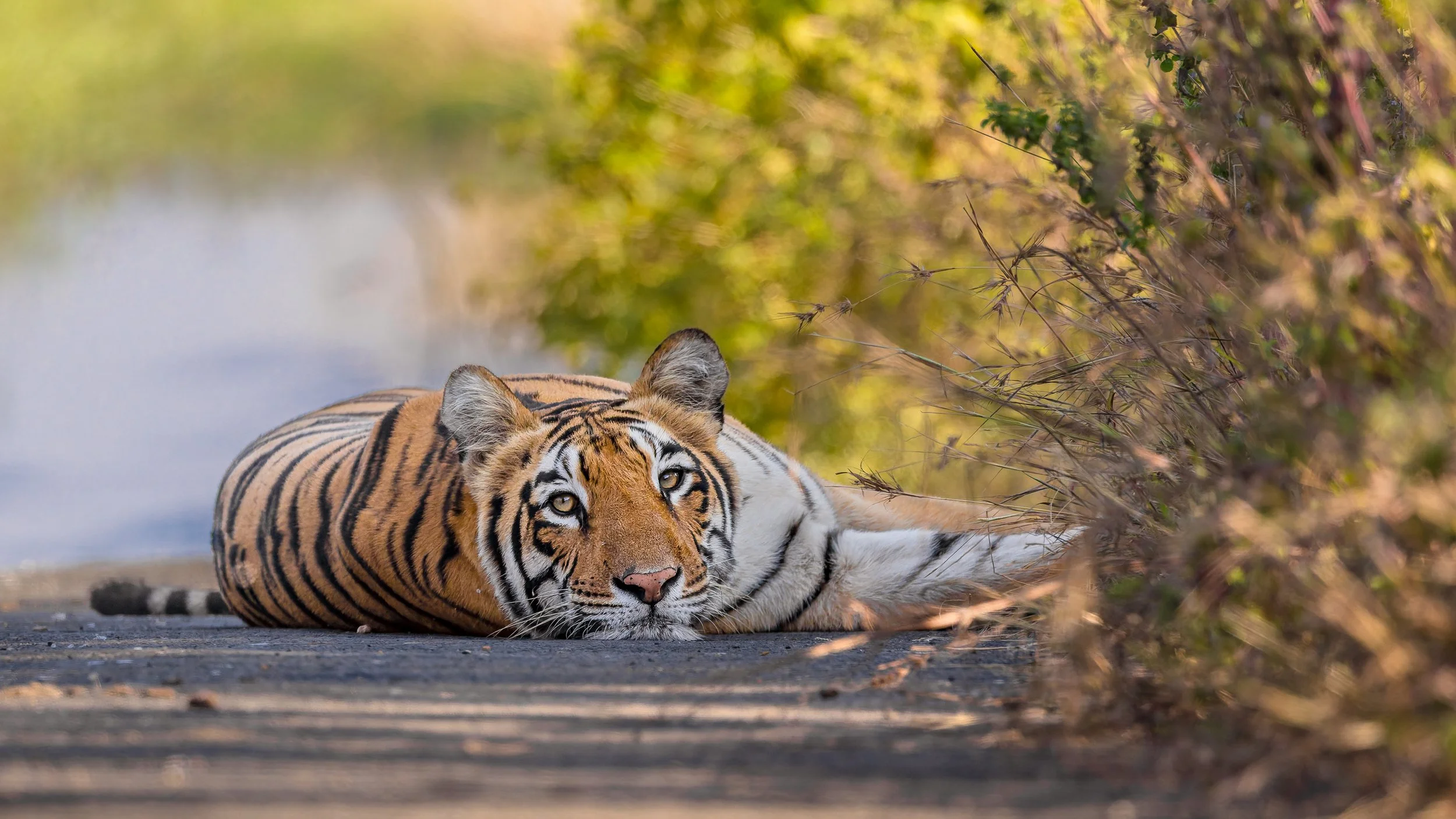
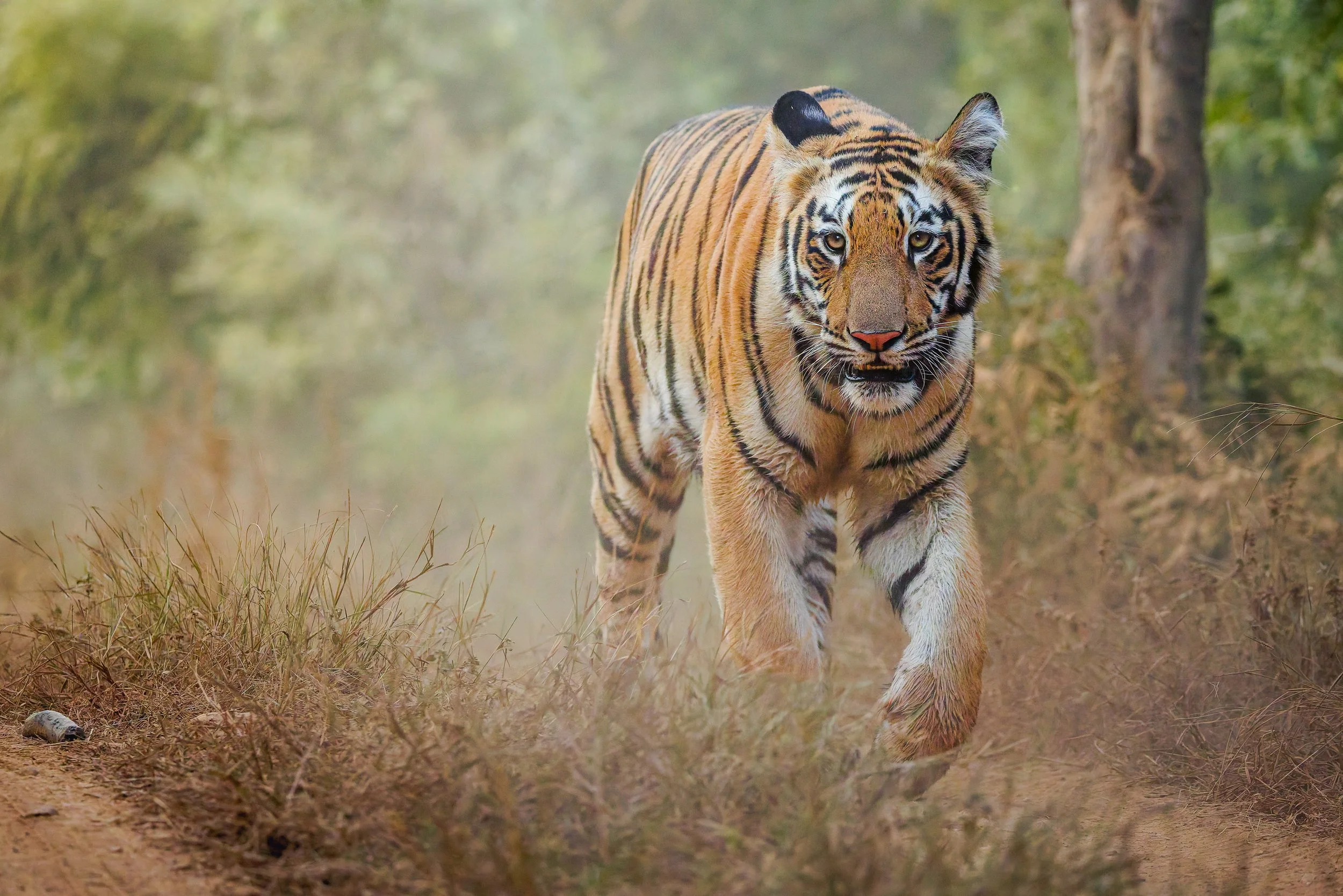
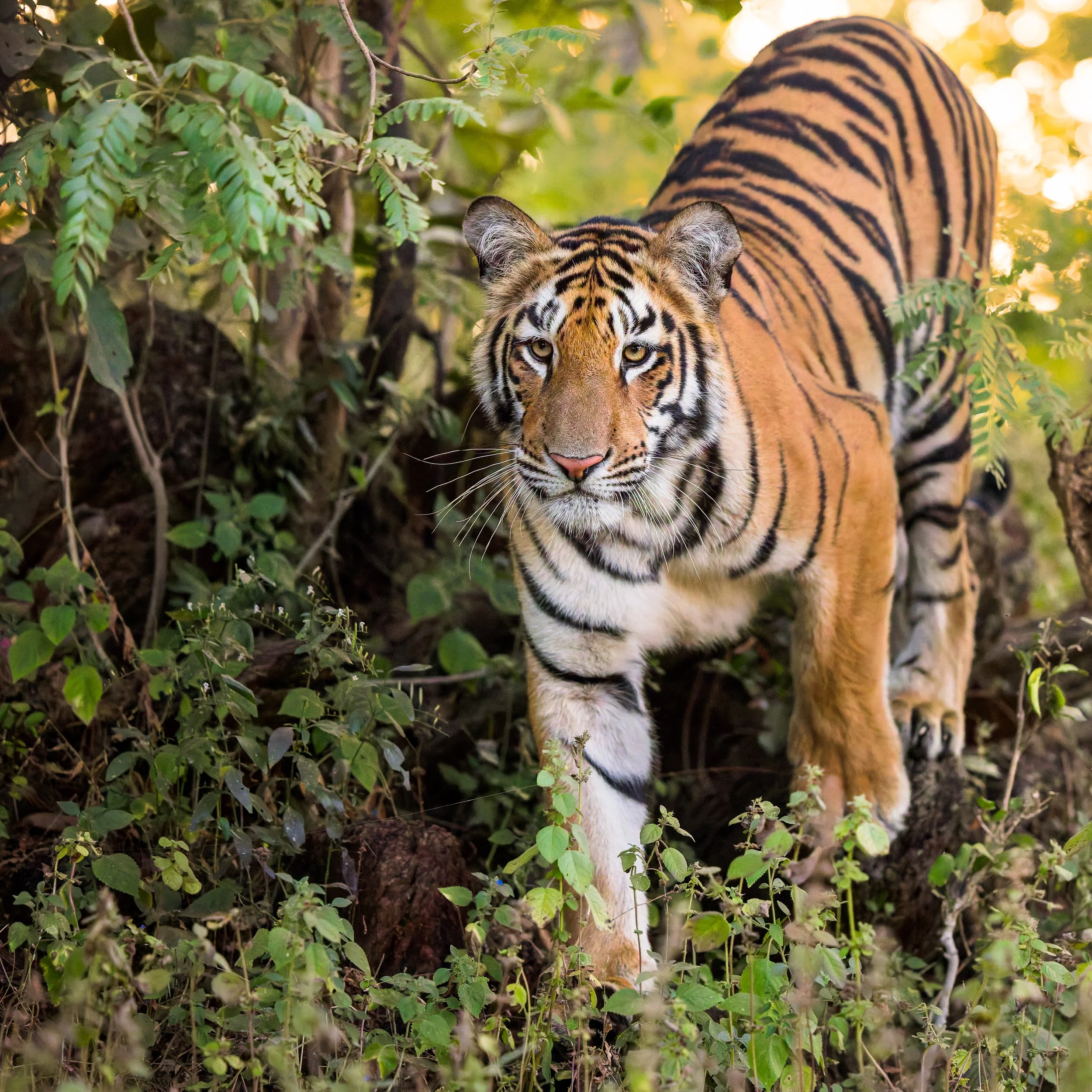
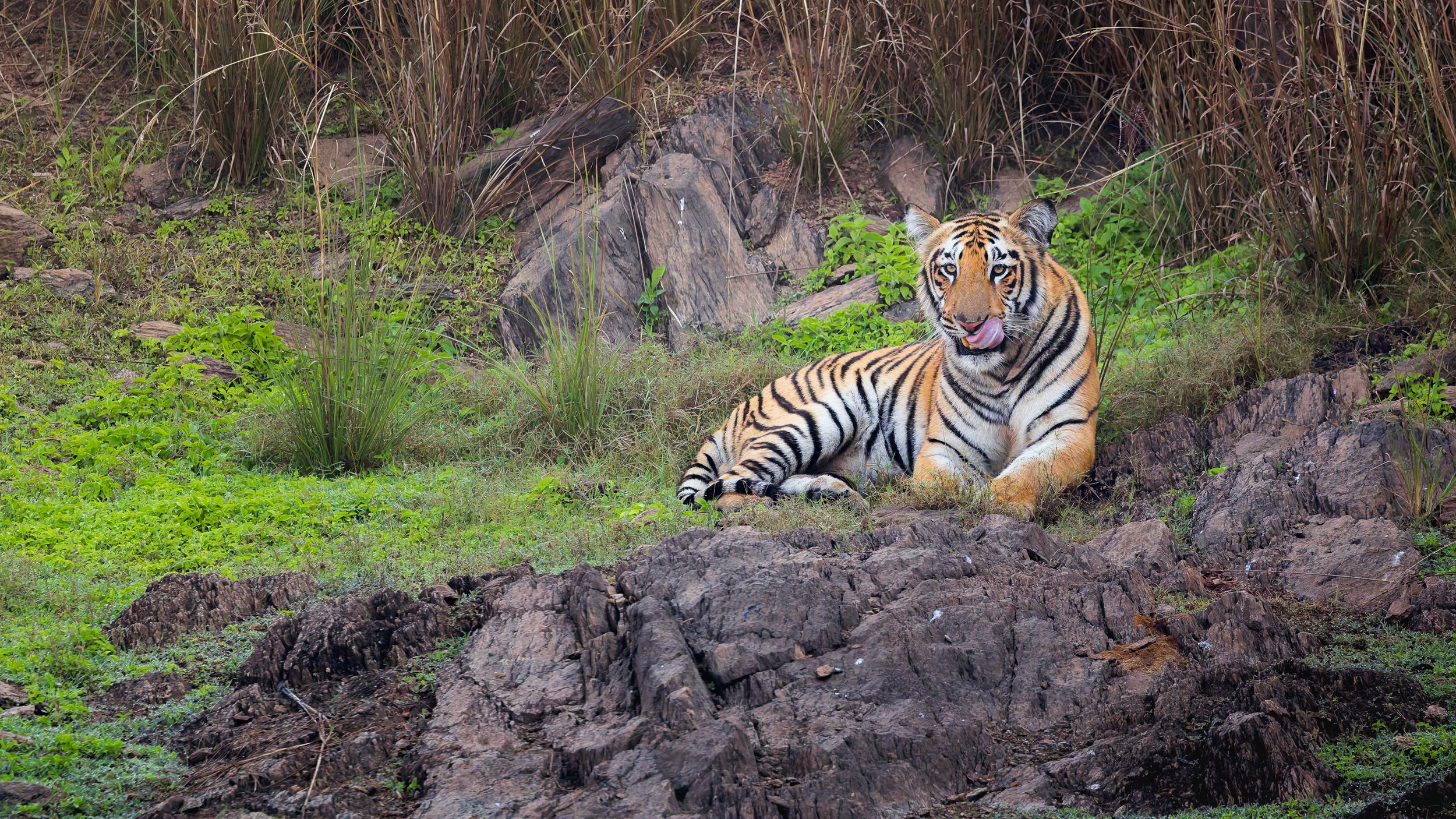
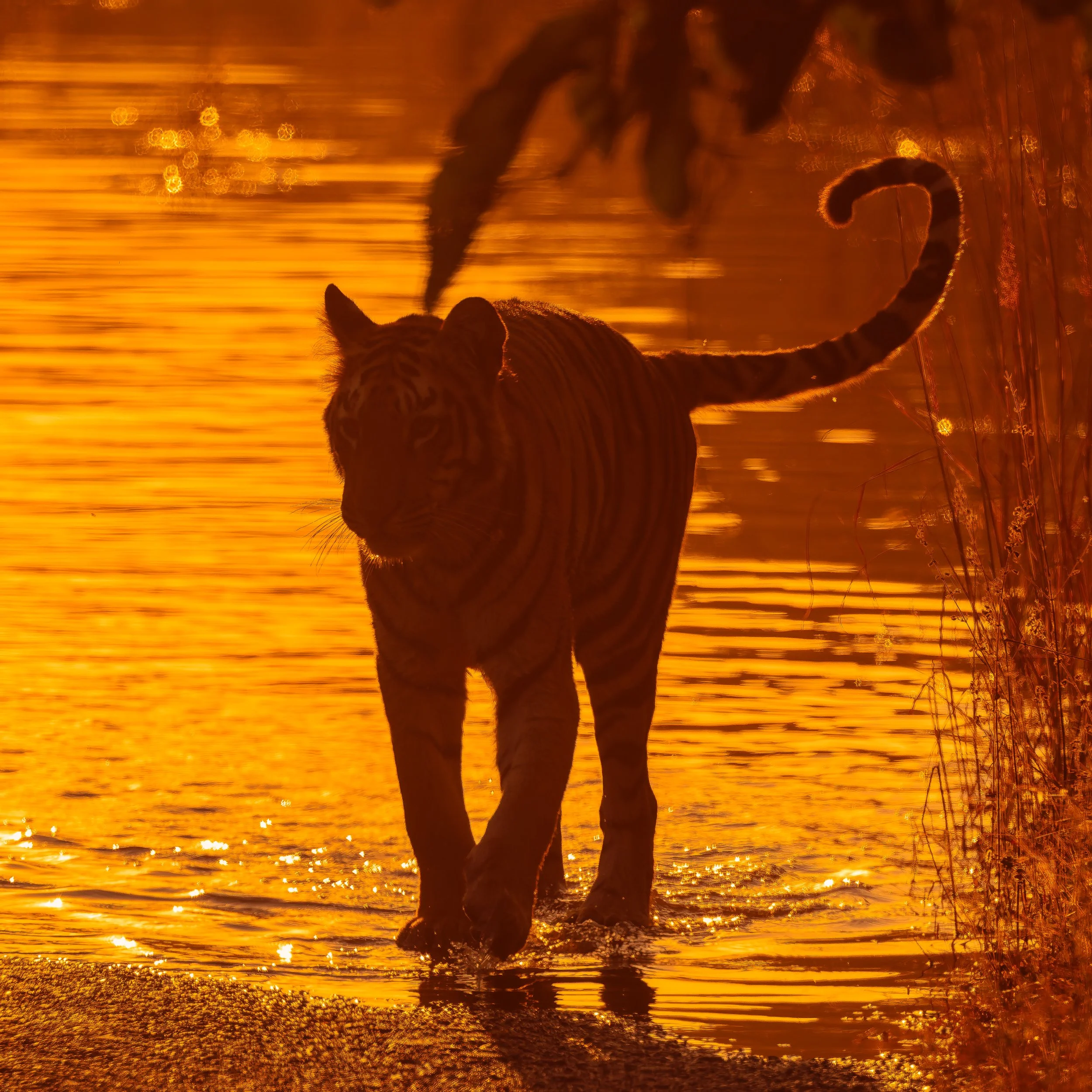
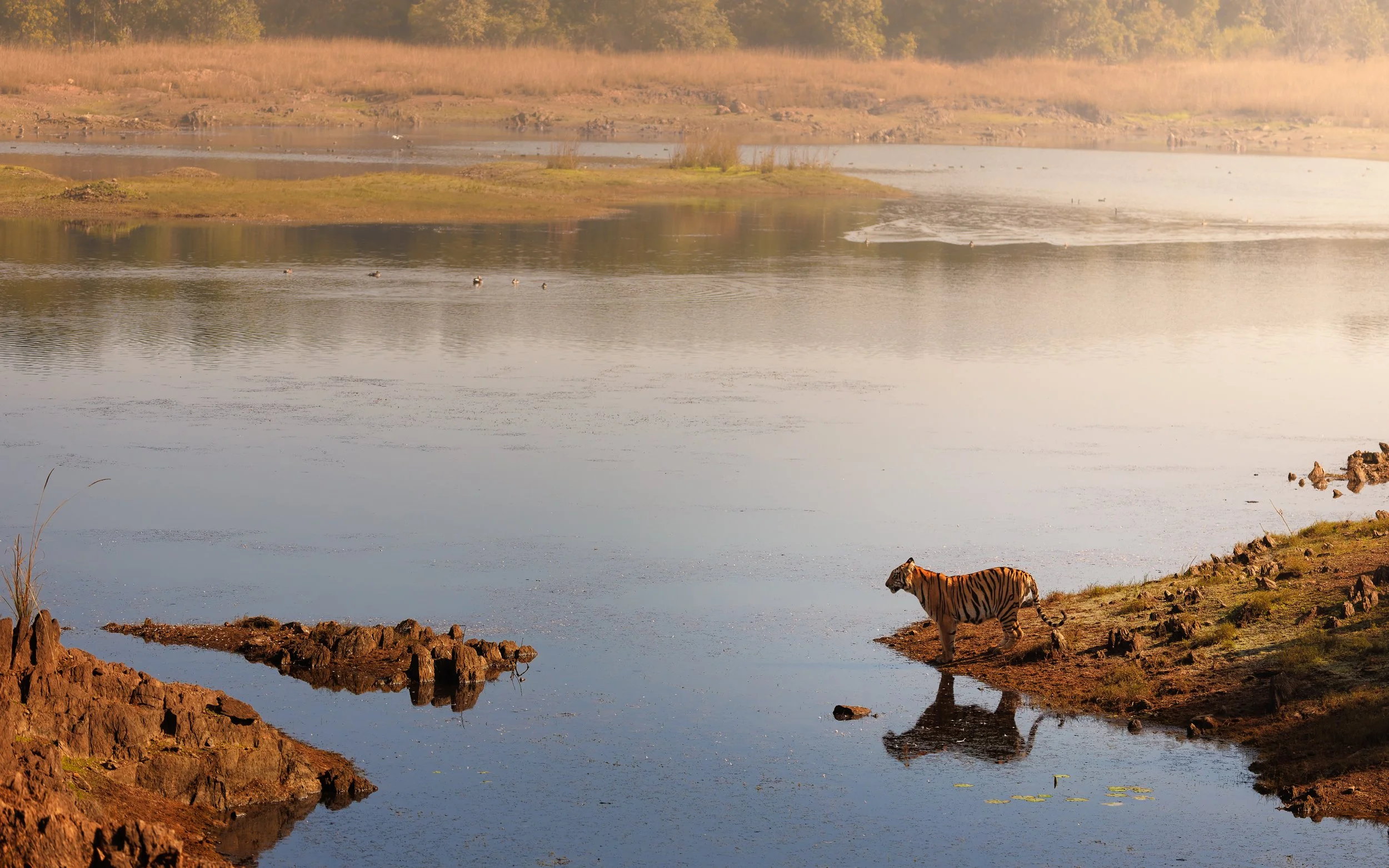
But as I’ve experienced on many other trips, a special gift awaited us on our last drive in Gothangaon.
A final hurrah
Our last morning at Karhandala was uneventful. That left us with just one drive in Gothangaon. That day, the rumour mill was in overdrive. Someone said that the tigers had gone AWOL again. My son wanted to sit it out. I had to coax him into the jeep. Heck, I had to coax myself into that vehicle. One more drive. Just one more drive.
We were determined to make it back to the wetland, where we had a fighting chance of finding F2 and her cubs. The first hour of the drive, however, was everything we’d feared it would be. There were no reliable signs of tigers. No alarm calls, no spoor, and enough human activity to spook the boldest of cats. An earthmover moved noisily across the rutted road that cuts through the forest. We couldn't even take our intended route to the wetland because contractors were blocking the road. Forced to detour, I spotted some movement in the bush, low to the ground. I thought it was a wild boar, so we drove up to check.
Surprise, surprise! It was a male tiger! J-Mark, the challenger male, was sitting on the forest track, waiting for the contractors to leave.
J-Mark, the burly challenger
In a fragmented forest like this, big males are ghosts. They are reclusive and hard to track. Yet here he was – a private sighting that we eventually had to announce to the other cars. J-Mark was in the mood to patrol that afternoon. He walked for miles, crossing from Gothangaon into Karhandla, marking his territory, utterly indifferent to the vehicles trailing him.
It was the only male tiger we saw in UPKWLS, and it was the perfect end to the trip.
When planning this trip, I’d hoped to see tigers in one out of four drives – a strike rate of 25%. Had I left on Wednesday, my strike rate for the trip would have been zero. But we stayed till Saturday, and the strike rate in Gothangaon rose to 50% – well above that original estimate. My wife, the genius of our family, sat out two of the dusty, unproductive drives in Gothangaon. Her strike rate was 60%. Whatever I do, she does better.
This safari broke me down, stripped away my patience, and almost made me quit. But the law of averages is a real thing in the wild. If you grind long enough, the forest eventually pays you back. Mother Nature has her own mysterious balance. Call it superstition, call it luck or call it the law of averages – the more time I spend in the wild, the more the rewards pile up. I wish I knew which games I’ll win, so I can only play those hands. Until I become that prescient, though, I’ll stay in it to win it.
Trip logistics
If you’re brave enough to try your luck at UPKWLS, here’s a quick breakdown of the zones:
Gothangaon: The current hotspot, though not the main zone of the reserve. Home to F2 and her 5 cubs. Since tracks are narrow, this zone is prone to chaos at sightings.
Karhandla: The main zone of the reserve. Most resorts are in this area too. We didn’t have any luck here, but I suspect that you’ll have decent sightings if you give yourself time.
Pauni: The sanctuary’s buffer zone. I’ve seen reports of tigers and their cubs in this area, but I had little luck in the few drives we did in this zone.
Pro tip: Be prepared for dust, weeds, and the occasional desire to scream at the forest department. But if you stick it out, the tigers are just as magnificent as any other, when they show up.